
New book discloses all information about the Second World War German Panther-Stellung
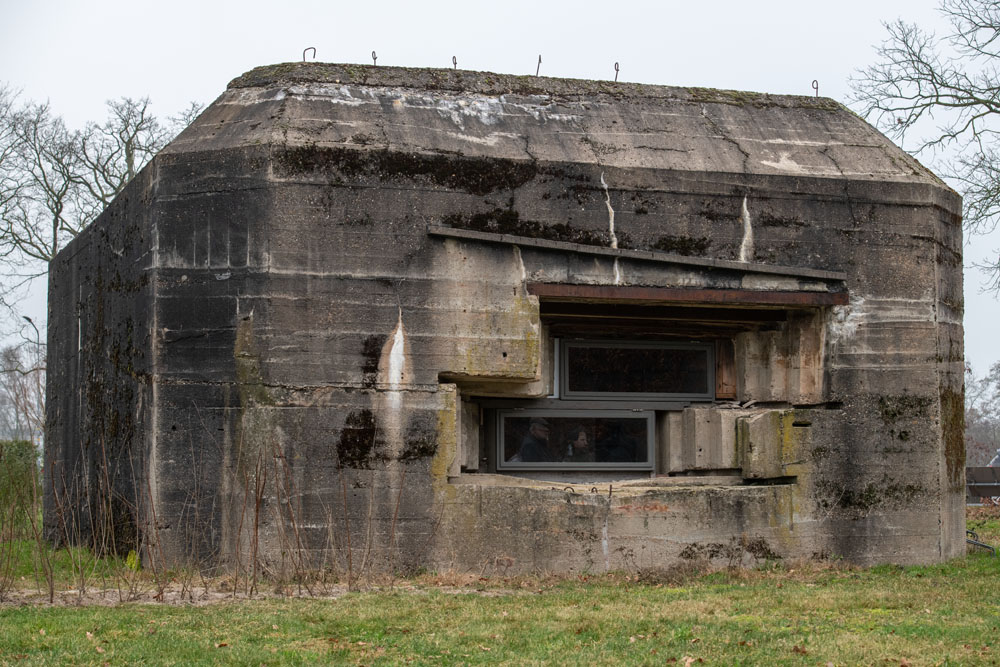
The Panther-Stellung was the last German fortified defence line of the Netherlands in the Second World War. Leo van Midden wrote an extensive book about this interesting topic which covers the area between roughly Spakenburg at the IJsselmeer until the Rhine at Arnhem. Most visible today are the casemates for 8.8 cm Pak 43/3 type 703. But when you look closer there’s much more to the Panther-Stellung than just these late war Regelbauten. Bunkersite.com spoke to the author Leo van Midden about his book.
Where did your interest for the Panther-Stellung come from?
My interest in the Panther-Stellung stems from my fascination with a remarkable structure in my neighbourhood. Its origin and purpose were unknown. When I investigated, I discovered that the structure was part of a much larger complex, a defensive line called the Panther-Stellung.
Where can you place the Panther-Stellung in the Third Reich fortifications ‘timeline’?
In the Third Reich fortification timeline, you can place the line between 30 August 1944 and 19 April 1945. The first date is when the Führer gave the order to set up the defence line. The second date is when General Blaskowitz used the term Grebbe-Stellung to announce the new line of defence that replaced the Panther-Stellung. This had become necessary because the Allies had crossed the Rhine during Operations Plunder and Varsity and were now behind the Panther-Stellung.
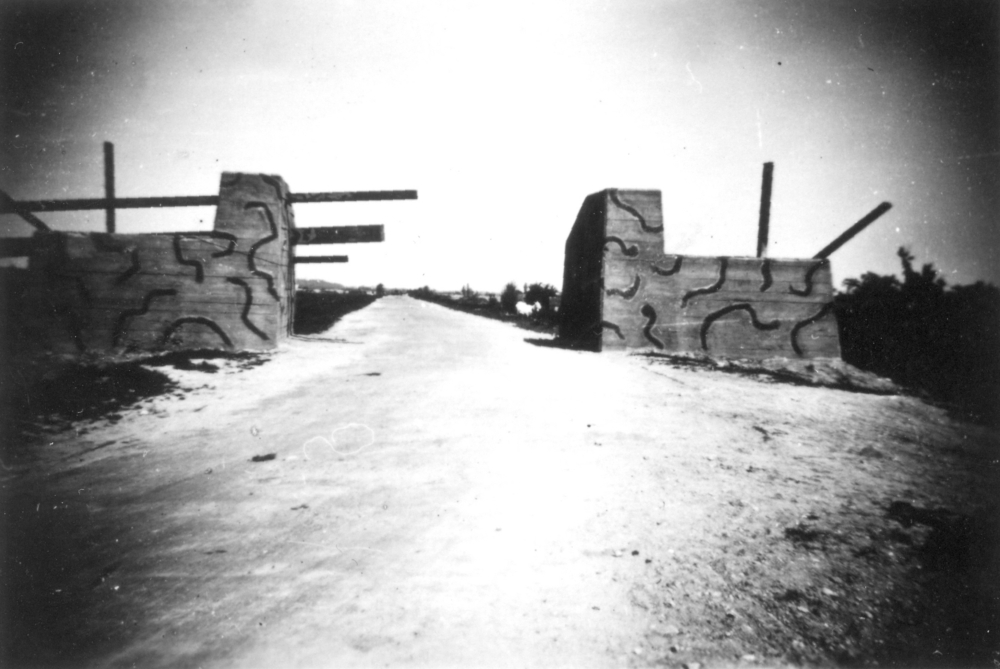
German Sperre at the Slaperdijk near Leusden. (Collection: H. Henzen)
In your book I read about the involvement of the NSDAP. How did political party members get involved in the construction of a military defence line?
The NSDAP became involved because the party leader of East Prussia, Erich Koch, called on the population to build defences as Soviet troops approached the border of East Prussia. The NSDAP thus provided the labour force at a time when military builders and professional forces from the Organisation Todt were not yet available. It also made tactical choices that later proved less fortunate, but the massive deployment of the people of East Prussia became an example of “National Socialist defence”. An example that was to be followed in the west, where the Dutch population was less enthusiastic about digging for the Reich than the population of East Prussia.
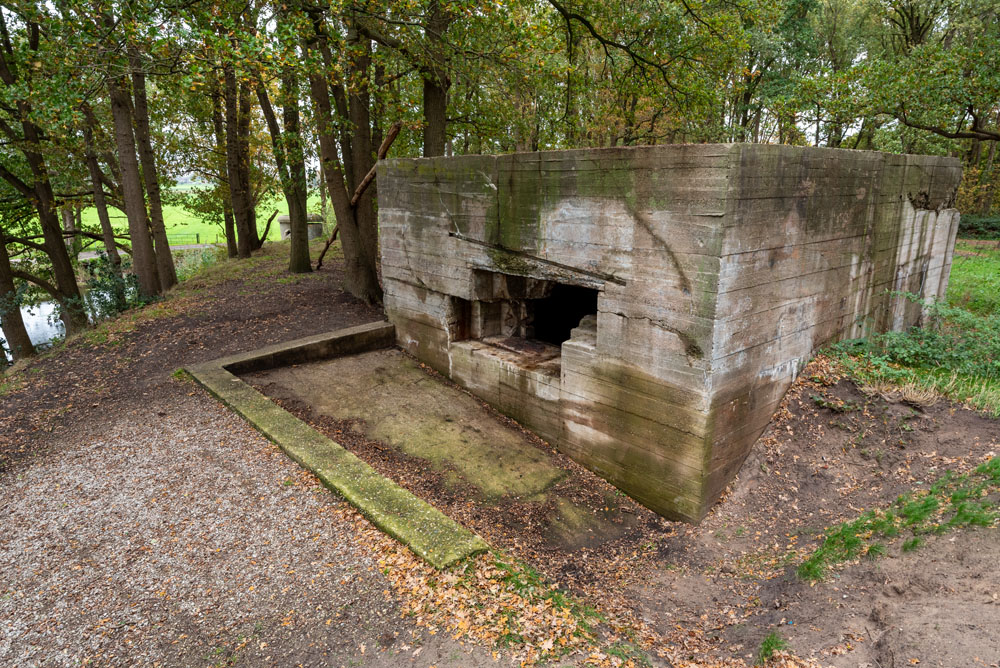
Regelbau 703 with socalled Mündungsgasgrube at Fort aan de Buursteeg, between Renkum and Veenendaal.
The most wellknown remnants are the interesting Regelbauten type 703. How did they fit into the entire idea of the Panther-Stellung?
The type 703 was developed in response to the urgent need for anti-tank capabilities. The necessary resources, such as tanks, anti-tank guns and mines, were no longer available to Germany. However, tank guns were waiting in German factories to be installed in the Jagdpanther tank. Germany no longer had the materials to build these tanks. In order to stop the advancing Allied tanks, the tank guns were taken from the factories so that they could be used as quickly as possible against the Allied tanks. A structure was designed to protect these guns, and the 703 was created. Sixty of these structures had to be placed between the Rhine and the IJsselmeer to halt the Allies.
Was the Panther-Stellung ever put to use? Did the allies consider it a tough nut to crack?
When the Allies crossed the Rhine at Emmerich in late March 1945 during Operations Plunder and Varsity, they found themselves behind the defensive line. Six months of digging had been for nothing. However, the Germans quickly began constructing a new line along the route of the old Panther-Stellung, which they called the Grebbe-Stellung. The Panther-Stellung was therefore never used.

A Regelbau 703 in the Domstraat in Nijkerk is being sunk into the ground after the war. (Photo: Municipality Nijkerk)
What was your biggest learning point about German WW2 fortifications, studying the Panther-Stellung?
I would like to mention two things here. The first is the Koch bunker. A design of its time. A local initiative. Designed and tested at lightning speed and then introduced nationally as a standard construction type. It was subsequently used for many more purposes than initially intended.
Secondly, calling on the (Dutch) population to build the line of defence created a painful collaboration issue that each individual had to weigh up for themselves and which some people still struggle with to this day.
And last: What places should people visit to get a good idea of the Panterstellung?
If you want to see a fragment of the Panther-Stellung, the Grebbelinie Visitor Centre at Fort aan de Buursteeg in Renswoude is the best place to go. In addition to the information provided at the centre, there are three type 703s and Koch bunkers within walking distance.
More information
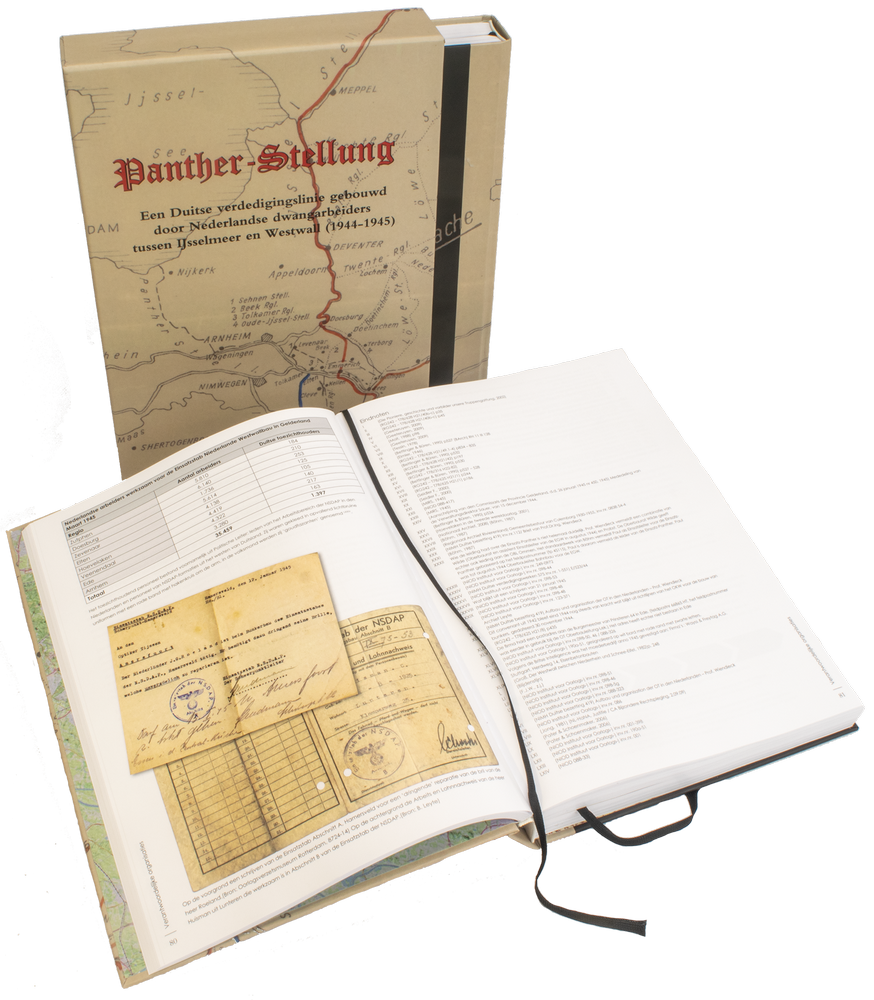
Titel: Panther-Stellung, een Duitse verdedigingslinie gebouwd door Nederlandse dwangarbeiders tussen IJsselmeer en Westwall (1944 – 1945)
Full of never before published maps, photos and plans from Dutch and foreign archives and private collections.
580 pages
ISBN: 9789090400556
Buy it: directly from the author via www.einsatz-panther.nl or via Bol.com, or combine a visit to the Grebbelinie and Panther-Stellung at the Visitor Center Grebbelinie and take a look at the book there.

Leave a Reply
Want to join the discussion?Feel free to contribute!